Bee removal Denver homeowners ask for usually turns out to be a wasp problem or a wood problem. When someone calls about "bees," the insect is most often one of two things: western yellow jackets nesting in the ground, or carpenter bees drilling into a deck, fence or pergola. Both are jobs for a pest pro, and both are what this line connects you with. Call (983) 225-1941, describe the insect and where it's coming and going, and get matched with an independent local pro who handles stinging insects across Denver, Aurora, Lakewood and the rest of the metro.
The honest exception: honeybee swarms and established honeybee colonies are not something this line handles, and the pest pros it reaches are not the right call for them. Colorado State University Extension notes that local beekeepers will often collect a fresh swarm, which usually shows up on a sunny afternoon in May or June, hanging in a cluster on a branch, and that many CSU county Extension offices keep lists of beekeepers willing to do it. Start there. Bees already living inside a wall are a structural job that typically involves a contractor opening the wall.
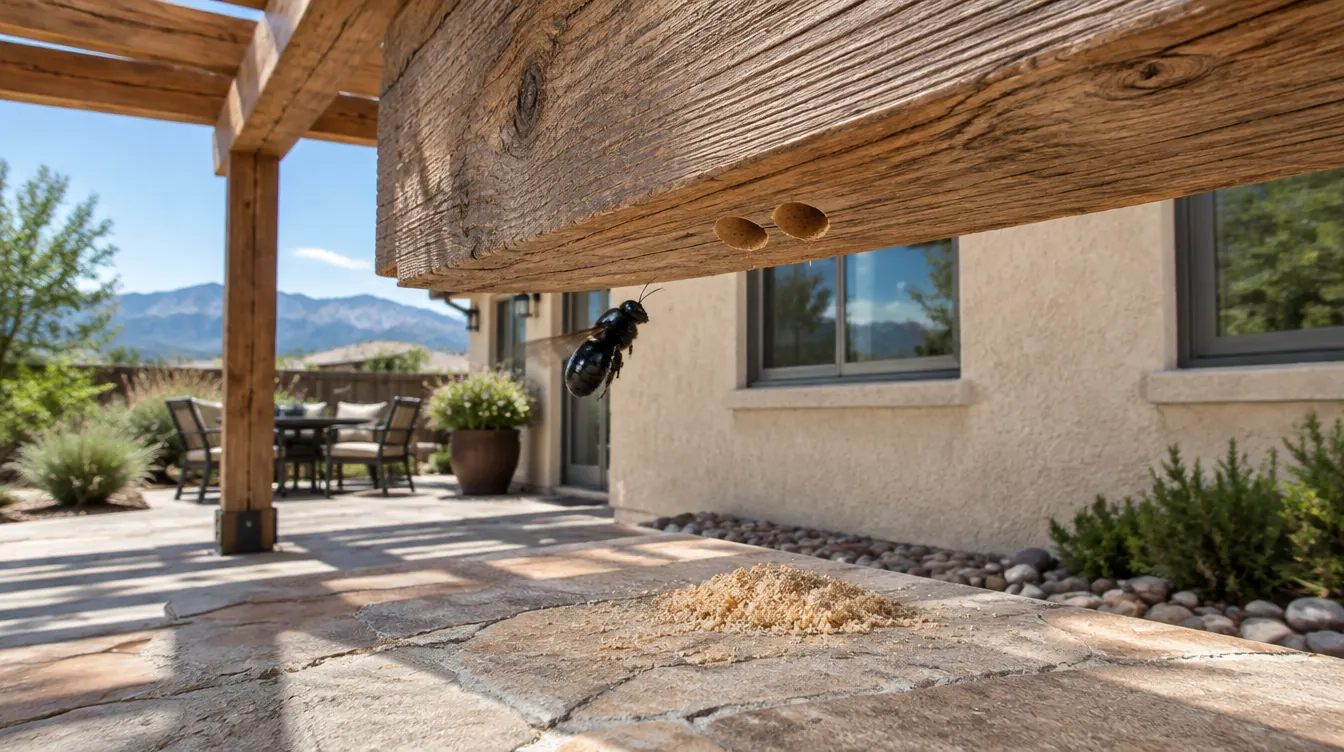
That's often carpenter bee work. Describe where the holes are and get a local pro to treat and seal them.
Call (983) 225-1941 NowBee Control in Denver: A Quick Way to Tell What You Have
You don't need to get close. Look from ten feet away:
- Shiny, hairless, bright black and yellow, coming out of a hole in the lawn or under a step: yellow jackets. CSU's nuisance wasp and bee fact sheet says they are commonly mistaken for bees but lack the hairy body.
- Big, heavy, glossy black bee hovering around wood trim, with a perfectly round hole and sawdust below: a carpenter bee.
- Slender black-and-yellow insects around a gutter, grill or swing set: European paper wasps. Those are covered on the Denver wasp removal page.
- A dense, fuzzy cluster hanging from a branch or fence: a swarm. See the beekeeper note above.
Getting this right on the call saves time, because a ground nest, a wood-boring bee and a gutter wasp each call for a different approach.
Ground Nesting Yellow Jacket Removal in Denver
Ground nests are the most common "bee in the yard" emergency. CSU describes the western yellow jacket as nesting underground in existing hollows in the soil, sometimes under landscape rock or a step, with a small entrance that is easy to miss until the mower rolls over it. The nest itself can sit some distance from that entrance, which is why pouring something down the hole rarely finishes it.
What helps before the pro arrives:
- Flag the hole from a distance in daylight so nobody steps on it.
- Keep kids and dogs off that part of the yard.
- Don't plug the hole, flood it or light it. Disturbed colonies defend hard.
Pros typically treat these at dusk, when the foragers are back inside. In older neighborhoods like Park Hill and Washington Park, with mature trees and decades of loose edging stones, it's common to find more than one entrance, so ask whether the price covers checking the rest of the yard.
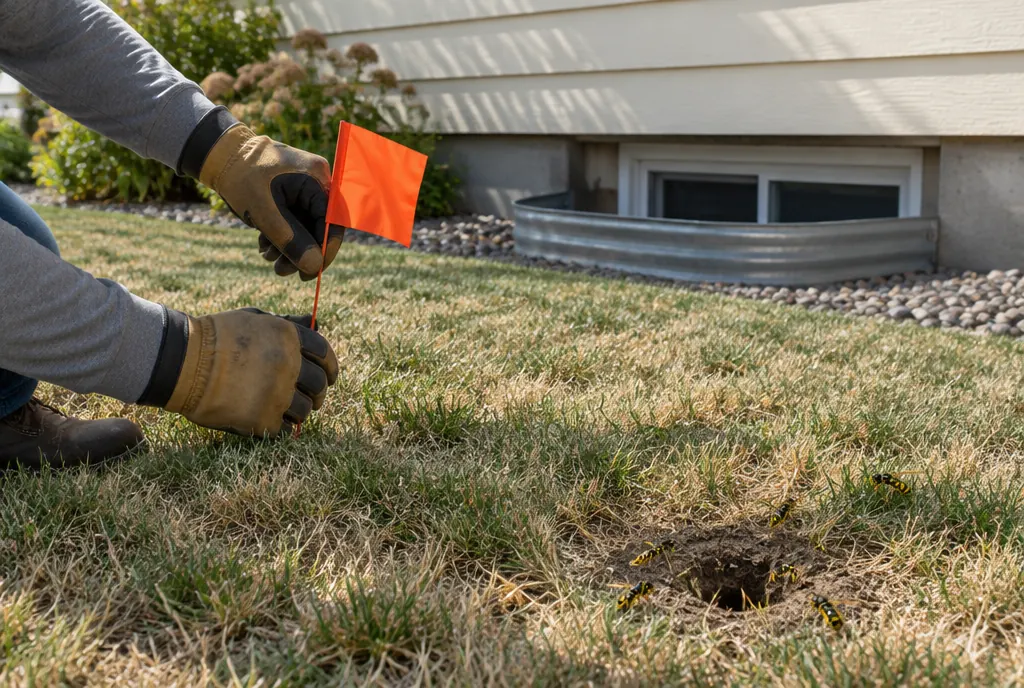
A disturbed nest turns into an angry swarm fast. Say where it is and let someone with the right gear handle it.
Call (983) 225-1941 NowCarpenter Bee Control in Denver
Carpenter bees don't eat wood; the females tunnel into it to raise their young. They go after bare, weathered softwood: cedar fences, deck rails, pergola beams, the fascia on a 1950s ranch in Lakewood, the unpainted trim on a garage in Baker. The tell is a clean, round hole about half an inch across with sawdust underneath. Males hover and dart at people but cannot sting; females rarely do.
A CSU Extension answer to a Colorado homeowner puts the timing simply: insecticidal dusts work best in early spring while the tunnels are still being dug, and painting vulnerable wood is the best long-term way to keep bees from coming back, since they avoid painted surfaces. A pro can treat the active galleries; sealing and painting afterward is what stops next year's bees from reusing them.
Denver Bee Removal: What to Mention on the Call
Have three things ready: what the insect looks like, where the nest or holes are, and whether anyone in the house has a sting allergy. Mention if you're in a townhome or HOA community, since common-area nests may be the association's job. Ask the pro for their Colorado Department of Agriculture pesticide applicator license number and proof of insurance before work begins. This site is a free call-connection service; the pros who answer are independent and price their own work. For published price ranges, see the Denver pest control cost guide, or go back to the Denver pest removal home page for other pests.
Seeing traffic at a hole in the lawn right now? Call (983) 225-1941 and describe it.
Describe the size, color, and where the nest is. A local pro can usually tell you on the phone what it is.
Call (983) 225-1941 Now