Wasp removal Denver homeowners call about comes in three very different shapes, and the shape decides how risky the job is. An open gray comb hanging inside the gutter or under the deck rail is paper wasps. A football-sized gray paper ball in a spruce or under the eave is a baldfaced hornet nest. A steady stream of black-and-yellow insects going in and out of a hole near the patio is western yellow jackets, and that is the one that sends people to urgent care. Call (983) 225-1941, say what you're seeing and exactly where, and get connected with an independent local pest pro who works these nests around the metro.
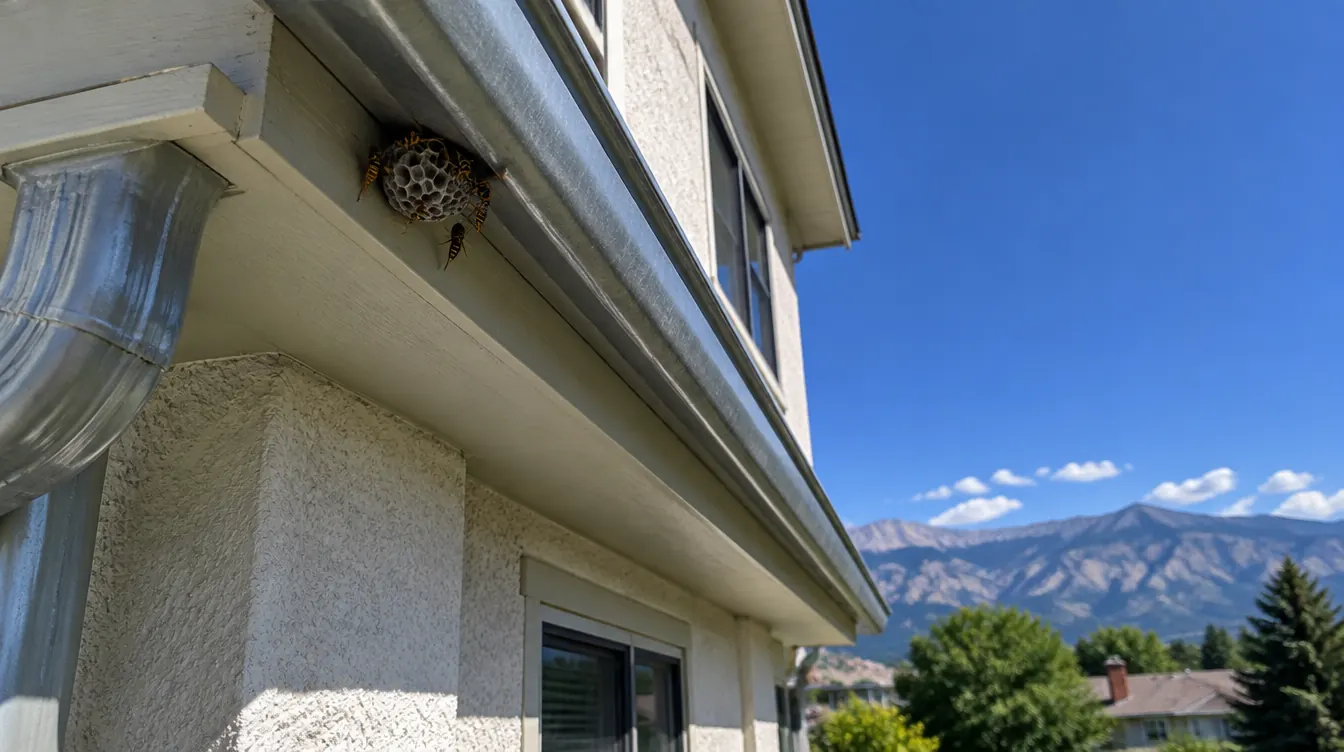
That's an established nest, maybe inside the wall. Note the spot from a distance and describe it on the call.
Call (983) 225-1941 NowWasp Control in Denver Starts With Knowing Which Wasp
Colorado State University Extension's fact sheet on nuisance wasps and bees puts it bluntly: the western yellowjacket is by far the most important stinging insect in the state, estimated to cause at least 90 percent of what people call "bee stings." It nests underground in existing hollows, sometimes in crawl spaces or wall voids, and the entrance is small and easy to miss.
The second culprit is the European paper wasp, a relatively recent arrival in Colorado. It looks a lot like a yellow jacket, but it builds open combs with no paper cover, and it is not picky about where. CSU lists small cavities in siding, metal gutters, poles, outdoor grills and the hollow tubing of kids' playground sets. That habit is why a single yard in Park Hill or Washington Park can have five or six small nests at once.
Baldfaced hornets round out the list. Their big enclosed nests in trees and under eaves get noticed because of their size, but CSU notes they rarely sting unless the nest is seriously disturbed. Placement matters more than size here: a hornet nest twenty feet up an ash tree may be a leave-it, while the same nest beside a bedroom window is a case for hornet nest removal.
Wasp Nest Removal in Denver: How the Job Actually Goes
A wasp nest gets harder to handle every week of summer. CSU explains that colonies start each spring from a single queen, stay small early, then grow fast; by late season a yellow jacket colony can hold hundreds of workers. Three practical points follow:
- Timing. Treatments work best in late evening or cool early morning, when the wasps are home and slow. That's why the pros who answer often schedule nest work near dusk.
- Ground nests take persistence. A yellow jacket entrance can sit some distance from the actual comb, so one application doesn't always finish it. Ask whether a follow-up visit is part of the price.
- Don't seal the hole. Plugging a yellow jacket entrance in a wall or under siding can push the colony to chew toward the inside of the house. Leave it open until it's treated.
Skip the gasoline, the garden hose and the late-night spray can. Those are the usual ways a quiet nest becomes a swarm.
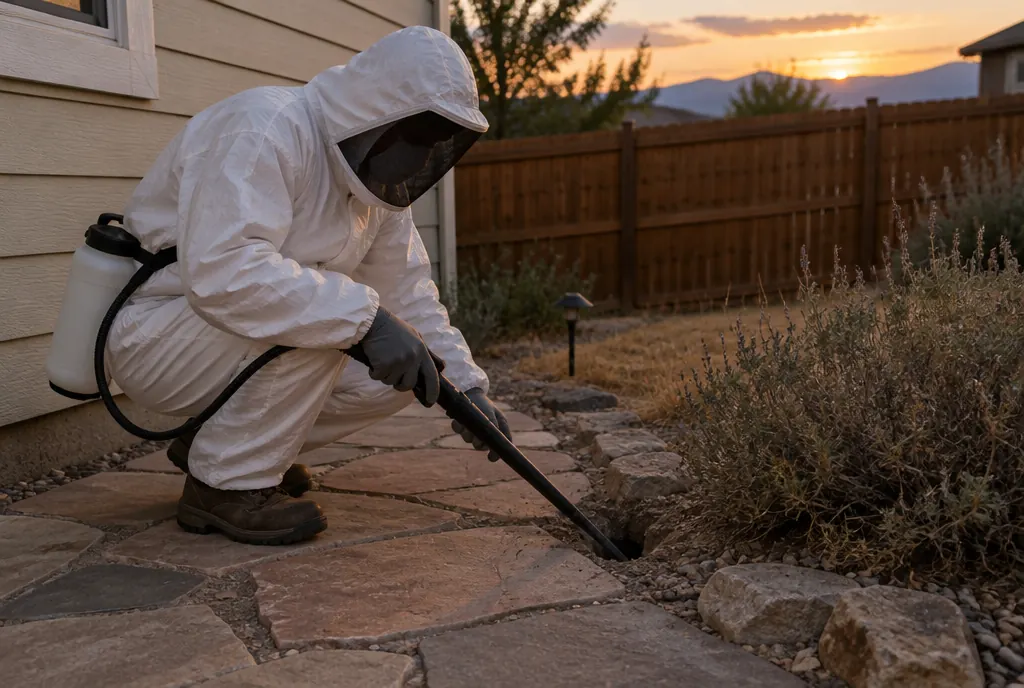
Ground nests get mowed over and turn dangerous fast. Mark the hole, keep people back, and get help.
Call (983) 225-1941 NowYellow Jacket Removal and the Late-Summer Picnic Problem
By August and September, yellow jackets are everywhere food is: patio tables in the Highlands, trash cans along Capitol Hill alleys, the backyard grill in Central Park. They forage far from the nest, which is why a swarm at the picnic table doesn't always mean the nest is in your yard. Keeping garbage lidded and pet food indoors helps. Traps baited for western yellow jackets do the most good early, in June and early July, when queens are still building, and they don't attract paper wasps or hornets at all.
If the late-summer traffic is coming from a hole in your lawn, your deck footing, or a gap in the siding of a split-level in Lakewood or Arvada, that's a nest to get treated, not tolerated. Anyone in the house with a sting allergy makes it urgent, so say that first on the call.
Hiring a Wasp Exterminator in Denver: What to Ask
The pros reached through this line are independent local businesses you hire directly; this site is a free call-connection service, not a pest company. Before work starts, ask:
- For their Colorado Department of Agriculture pesticide applicator license number and proof of insurance.
- How many nests the price covers, and whether they'll check the rest of the gutter line and play equipment while they're there.
- Whether a ground or wall nest includes a return visit.
Price depends on height, access and nest type. A reachable comb on a porch in Baker is a short visit; a yellow jacket nest inside a wall in Aurora or Littleton takes more. The Denver pest control cost guide has published ranges, and the Denver pest season guide shows when nests start and when they finally die off.
Not Sure It's a Wasp?
Fuzzy, round bees drilling into the deck, or a hanging cluster of bees on a branch, are a different call. The Denver bee removal page sorts out carpenter bees, ground nests and the beekeeper exception. For mice, termites and everything else, start from the Denver pest removal home page.
A nest that's small today will be bigger next week. Call (983) 225-1941 and describe it while it's still a one-visit job.
Urgency shapes scheduling. Describe the insect and the nest location and get it handled before someone gets hurt.
Call (983) 225-1941 Now