Treat this Denver pest season guide as a planning calendar. Denver sits on the semi-arid edge of the plains at about a mile high, with quick warm-ups, sudden cold snaps and a long dry fall. Pest activity follows that pattern closely, and the same sequence plays out from Arvada to Littleton. Most of what's below is manageable on your own; some of it is not. When something crosses that line, call (983) 225-1941 and get connected with an independent local pest pro who's seeing the same thing in houses all over the metro.

Fall is when Denver basements and garages fill up. Describe what you're finding and get exclusion work started.
Call (983) 225-1941 NowSpring: Ants Move In and Termite Swarmers Show Up
The first indoor complaint of the year is usually ants. Colorado State University Extension's "Ants in the Home" fact sheet explains why: in spring, soil warms enough to wake colonies up, but cool air keeps them from foraging normally outdoors, so they wander inside. Pavement ants, a fairly recent arrival in Colorado, are now often the species people notice most. They're small and dark brown and leave little piles of soil at cracks in the driveway, slab joints and basement floors. Larger black carpenter ants mostly forage in from outdoor nests; CSU notes that when they do nest indoors, it's almost always in wood that has had water damage, so a carpenter ant trail is worth a look at the nearest leak.
Spring is also when termite swarmers can appear. CSU's pest profile names the eastern subterranean termite as Colorado's most common species and notes that winged termites are produced in spring or fall. The key line for homeowners: winged termites indoors mean an infestation is present. Look for shed wings on windowsills and pencil-width mud tubes on foundation walls. Save a few swarmers in a sealed bag, then see the Denver termite exterminator page and call.
Late Spring: Miller Moth Season in Denver
Miller moths are a Front Range rite of passage. CSU entomologists describe them as the adult stage of the army cutworm, migrating each year from the plains of eastern Colorado, western Kansas and Nebraska toward the mountains, where they spend the summer before returning to the plains in September. Peak flights generally start in the last week of May or early June and can last five to six weeks, though some years start earlier.
They don't bite, sting or breed indoors, so this is rarely a call for a pest pro. CSU's advice: seal obvious gaps around windows and doors, cut back outdoor lighting at night, and if they're getting in anyway, set a lamp over a bucket of soapy water. They'll move on.
Summer: Wasp Season in Colorado
Summer belongs to yellow jackets and paper wasps. CSU's nuisance wasp and bee fact sheet explains that every colony starts from a single overwintered queen in spring, stays small through early summer, then grows fast. Two practical windows follow:
- June to early July. Traps baited for western yellow jackets work best now, while queens are still establishing nests. Late-season trapping does far less.
- Late summer. Colonies reach their peak, and yellow jackets start scavenging at trash cans, grills and patio tables in Washington Park and the Highlands, and pretty much everywhere else.
European paper wasps, which CSU notes now nest in metal gutters, grills, poles and playground tubing, add to the count. Nests near doors or in the ground near play areas are worth treating; the Denver wasp removal page explains how pros approach each type.
Nests are at full size and yellow jackets get aggressive. Describe where the nest is and get it handled safely.
Call (983) 225-1941 NowFall: Mice and Other Fall Pest Invaders in Denver
When do mice come inside in Denver? Typically when the first cold nights arrive in fall, and they keep coming as outdoor food runs short. A house mouse can fit through a gap only slightly wider than a quarter inch, so look at the usual entry points on Denver housing: utility penetrations, garage door corners, foundation vents on older bungalows in Baker and Park Hill, and settling gaps on newer homes in Central Park. Wildlife-damage guidance favors sealing with metal or concrete, because mice chew through foam, rubber and wood. Droppings in a kitchen drawer or scratching in the walls is the cue to call; the Denver rodent control page covers what a proper job includes.
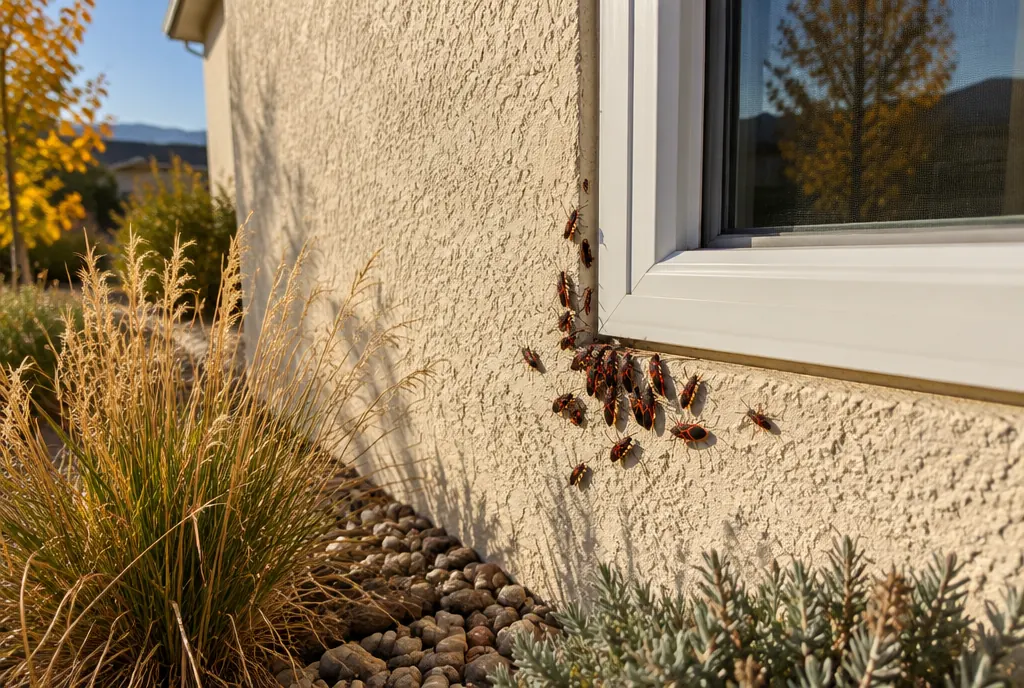
Boxelder bugs are the other classic fall visitor. CSU describes them crawling on the outside of buildings on warm fall and winter days and slipping in through cracks and screen doors. They don't bite or damage the house. CSU's suggestions are to seal cracks before late summer and vacuum the ones that get inside.
Fall also brings the end of wasp season. CSU notes that colonies are abandoned in fall and the remaining wasps die with cold weather. A nest that has been going all summer will be empty after a few hard freezes.
Winter: Quiet Outside, Not Always Inside
Once the cold sets in, the yard goes still. Empty paper nests can be knocked down safely in winter, according to CSU. Inside, though, mice that got in during fall can keep breeding, and on warm winter afternoons boxelder bugs may wake and crawl toward windows. Winter is a good time to look for entry points before spring ants arrive.
When to Make the Call
Call when a pest is inside the living space, when stinging insects are near doors or play areas, or when you see termite signs. Ask any pro for their Colorado Department of Agriculture pesticide applicator license number and proof of insurance. This line is a free call-connection service to independent local businesses. For more pest pages, go back to the Denver pest removal home page, or call (983) 225-1941 now.
Swarmers every spring, droppings every fall, a nest every summer. Patterns mean it's established. Describe yours.
Call (983) 225-1941 Now